
I'm Nader Eloshaiker. I lead WheelHub, from Melbourne. This is the first post on the WheelHub blog. Here we will share where WheelHub is and what has changed. The posts will be short, dated and signed.
Who is building it
I'm an electrical engineer. I started out in automotive engineering at General Motors Holden. At the same time, I taught software engineering at Swinburne University. Since then, I have worked mostly as a software engineering consultant. WheelHub is the third technology startup I have founded.
We are a small team. We build WheelHub with train maintainers in Australia. Their depots, their limits and their questions refine what it does.
Until now, most of our time has gone into building and refining WheelHub. Now we are also setting up the business properly.
What WheelHub does today
Wheels are measured with care. But the readings often end up spread out. Some are in files from a gauge, some are on paper, and some are in a spreadsheet for each depot. WheelHub puts them all in one place, wheel by wheel.
First, you set up a measurement plan for each type of vehicle. The plan lists its cars, bogies, axles and wheels. It also holds the limits from your own standards.
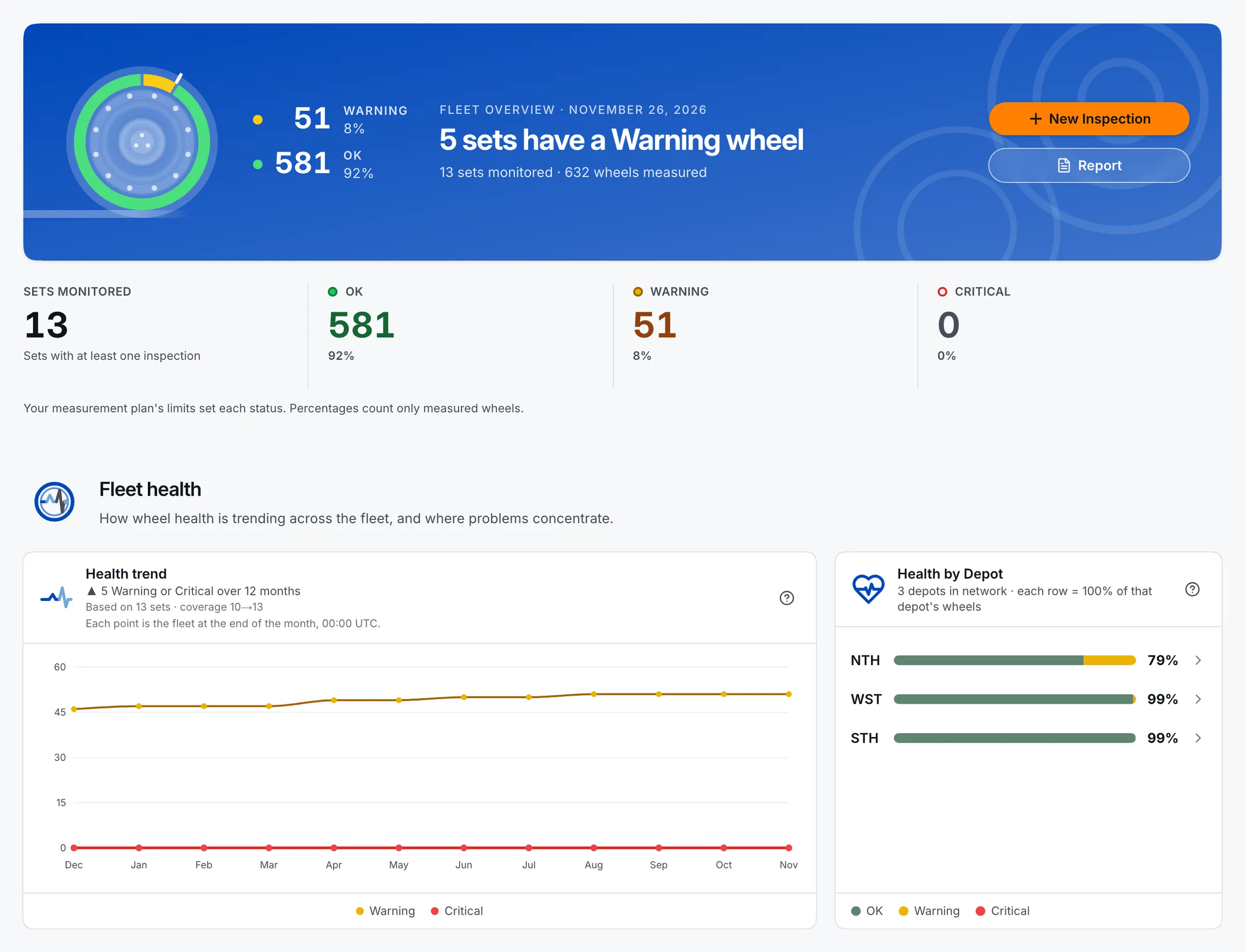
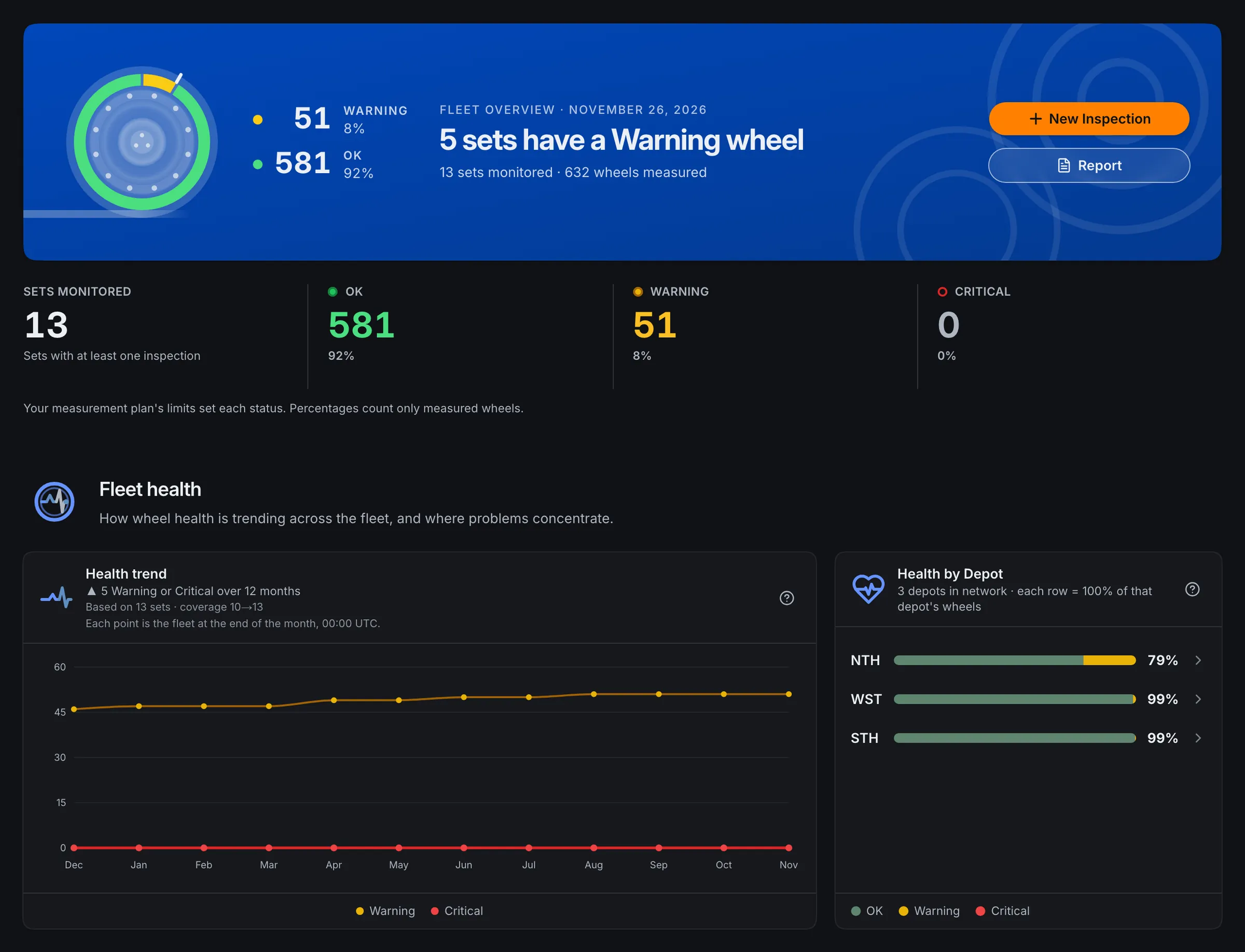
Then you upload a file from your gauge, or type the readings in. WheelHub puts each reading on the right wheel. It compares each reading with the limits in your plan. It shows how each wheel is wearing over time. Once a wheel has enough readings, WheelHub shows when it is forecast to reach a limit. A forecast is always labelled as a forecast.
The fleet view shows the trains with the worst readings first. For the people who plan lathe work, WheelHub shows which wheelsets are forecast to reach a re-profiling limit around the same time. It also shows how much each cut took off each wheel.
What the beta taught us
WheelHub has been in open beta. Fleets in service have been using it. That has taught us the most, because real files and real depots are messier than any example. Here are three things we learned.
Plans change over time
Each wheel's name is typed into the measurement plan once. When someone measures a wheel, they pick it from that plan on the gauge. But plans get revised over time, and a wheel's name can change.
So WheelHub puts each reading on a wheel by its name, never by where it sits in the file. If a name in the file is not in your plan, WheelHub saves nothing. It shows you which names it could not find.


Wheelsets move
Wheelsets get swapped between trains. They get re-profiled, and they get replaced. A wheel's history only makes sense if these changes are recorded.
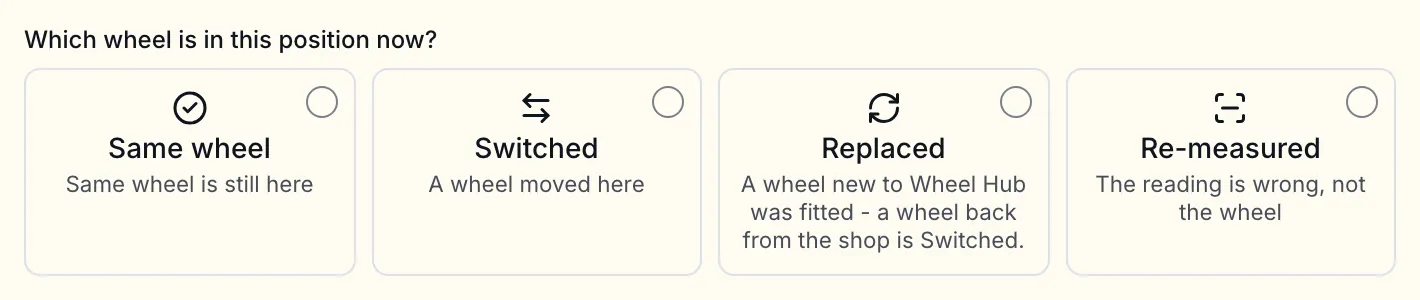
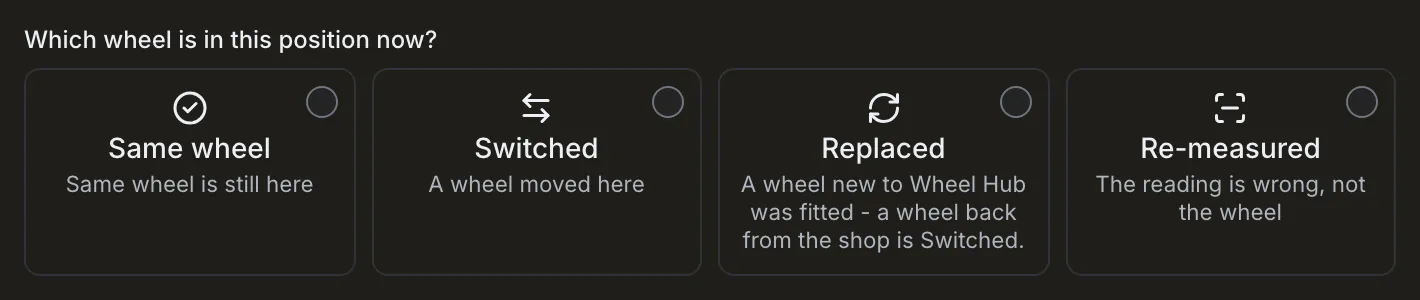
Sometimes a new reading does not fit with a wheel's past readings, and wear cannot explain the difference. When that happens, WheelHub flags the wheel and asks you what happened. It never guesses the answer for you.
Not every reading comes from a file
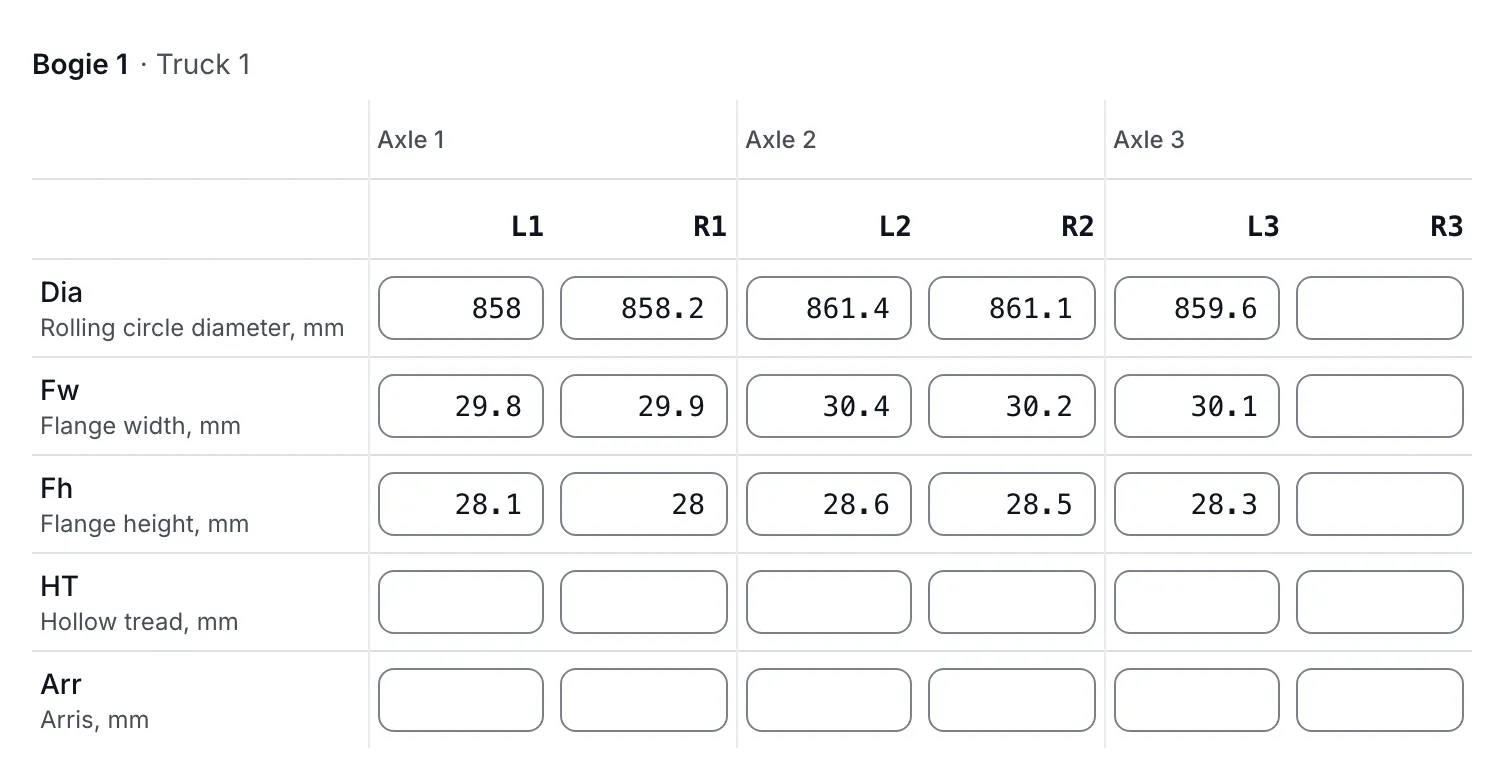
Many wheels are still measured with hand gauges, and the numbers are written on paper. You can type those readings into WheelHub. They join the same wheel and the same history as readings from a file.
Each of these lessons started with a problem a depot ran into. Each one changed WheelHub.
WheelHub is free to use while it is in beta. If you measure wheels and would like to see your own readings this way, email us at hello@wheelhub.io. We answer our own email.